
AI Chess Coach: What It Can Tell You That a Game Review Can't
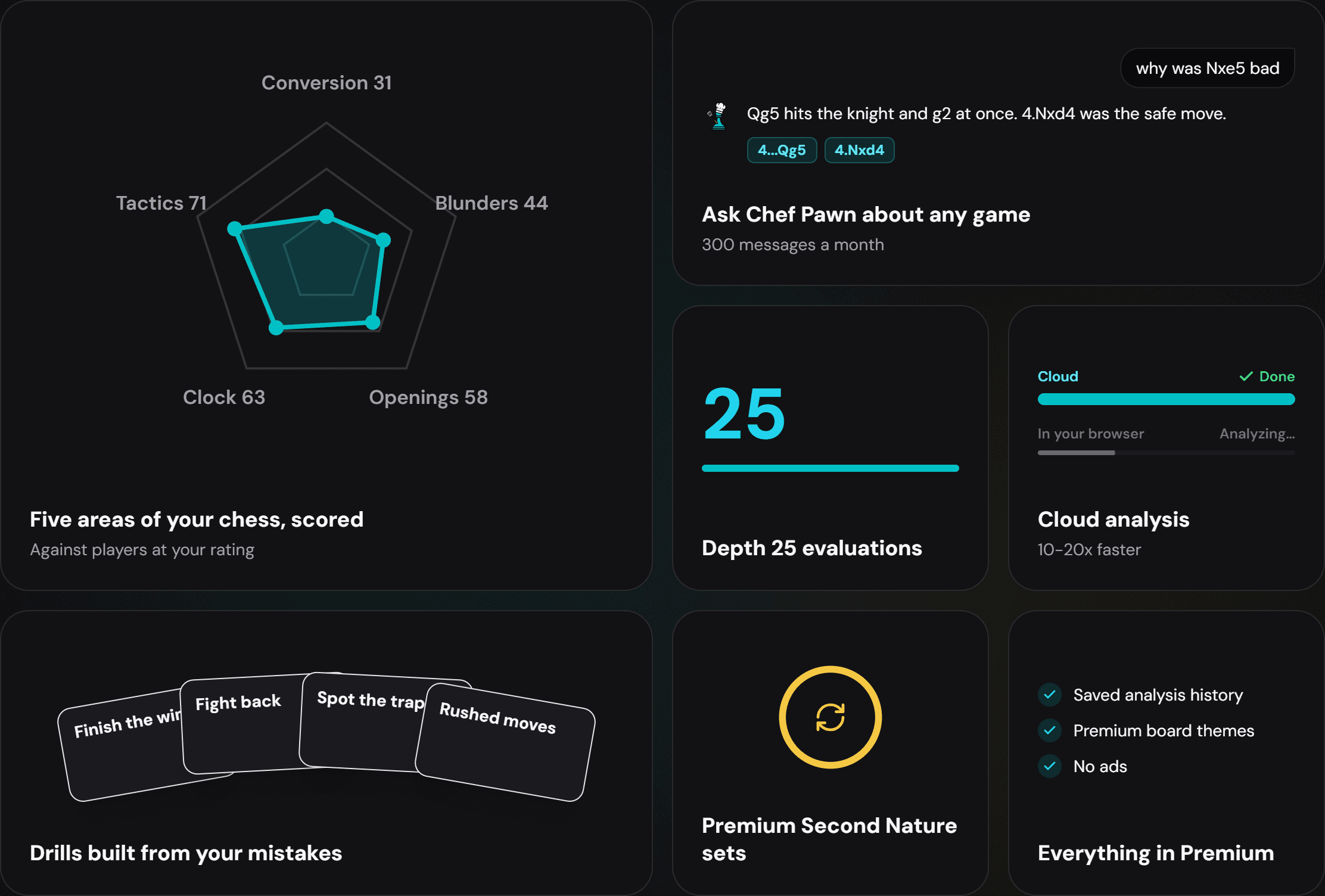
You review a loss and the report shows two blunders. You nod, close the tab, and queue another game. Next week the same thing happens in a different opening against a different opponent, and the report shows two blunders again.
Each review was correct. Neither one told you that both games were lost the same way: you were ahead by a piece, you stopped checking your opponent's threats, and the advantage was gone four moves later. That pattern lives across games, and a tool that looks at one game at a time cannot see it.
Seeing it is the job of a coach. This article explains what the Chess It Up coach does with your games, how much of it is AI, and what we did to stop the AI part from making things up.
One Game Is an Anecdote
A game review answers a narrow question: which moves in this game were good, and which were bad? The answer is useful the same evening, while you still remember what you were thinking.
It says nothing about frequency. A blunder on move 23 could be a one-off or the eleventh time this month you dropped a piece in a winning position. Working that out by hand means opening thirty reports and keeping a tally, which is the method in our guide to analyzing your own games, and which almost nobody keeps up for more than a week.
The coach does the tally for you. It takes your last thirty rated games from Chess.com or Lichess, grades every move with Stockfish using the same move classifications as the analyzer, and then counts.
Five Scores, Each Against Players at Your Rating
The counting produces five scores from 0 to 100:
- Blunders. How often you hand over material or walk into a mate.
- Clock. Time trouble, and serious errors you played in a few seconds.
- Tactics. How often you punish your opponent's mistakes when they make one.
- Conversion. Whether you win the games in which you reach a winning position.
- Openings. How your positions look when the opening ends.
A score of 50 means you are level with players at your rating. The comparison uses the real range, such as 1000 to 1200, because a 1100 player who blunders 1.8 times a game needs to know what other 1100 players do, and what a grandmaster does is irrelevant to them.
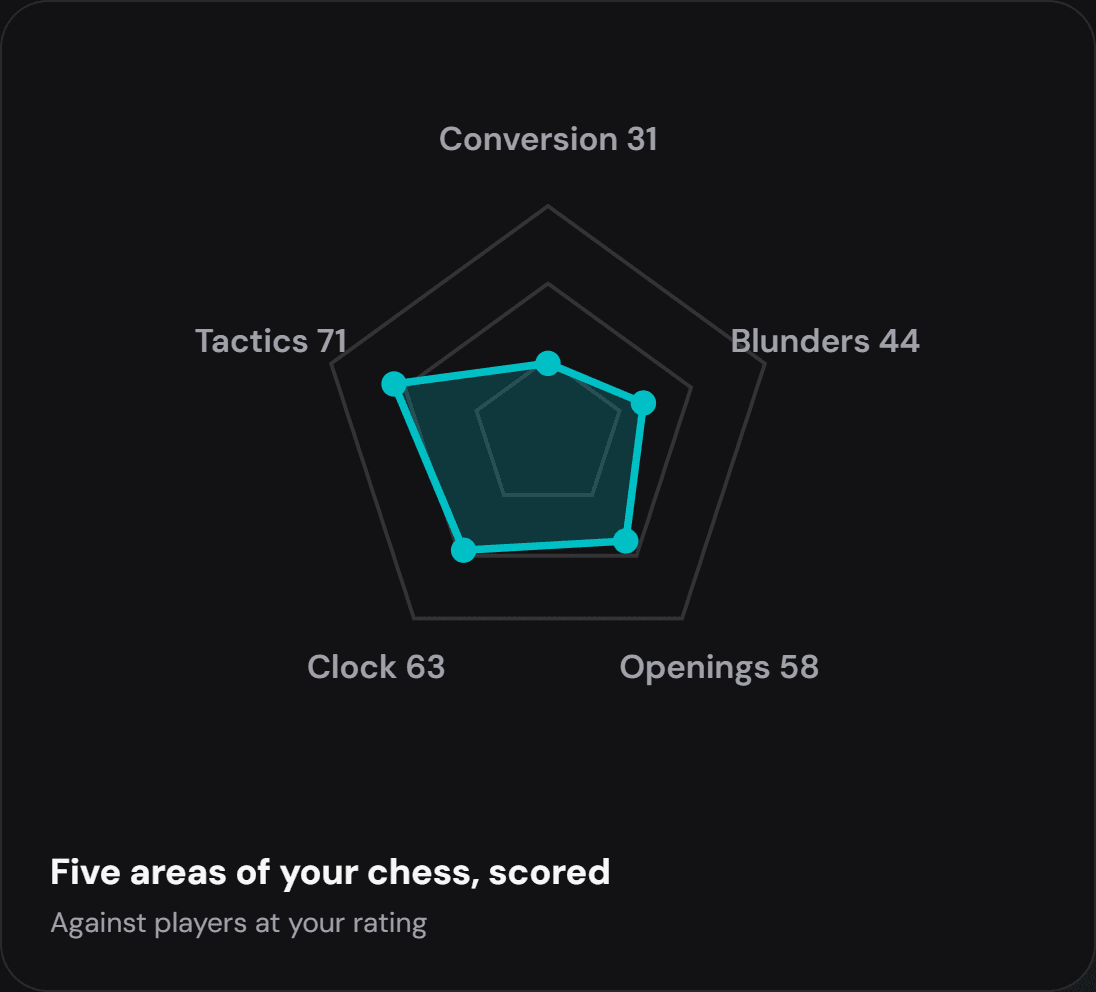
The account in that picture is a sample. Its lowest score is Conversion at 31: it reached a winning position in eleven games and won three of them, where a typical player at the same rating wins six. That single line is a better training plan than "study tactics." This player finds the tactics. They lose the games afterward.
Two rules keep the scores honest. With only a handful of games, every score is pulled toward 50, so six games cannot produce a 5 out of 100. And blitz and rapid are scored separately, since they are different ratings and averaging them describes a player who does not exist.
The Moves Behind the Numbers
A score with no evidence is an opinion. Every number in the coach opens into the positions it was built from: the move you played, the move that was better, and how much of your winning chances went with it.
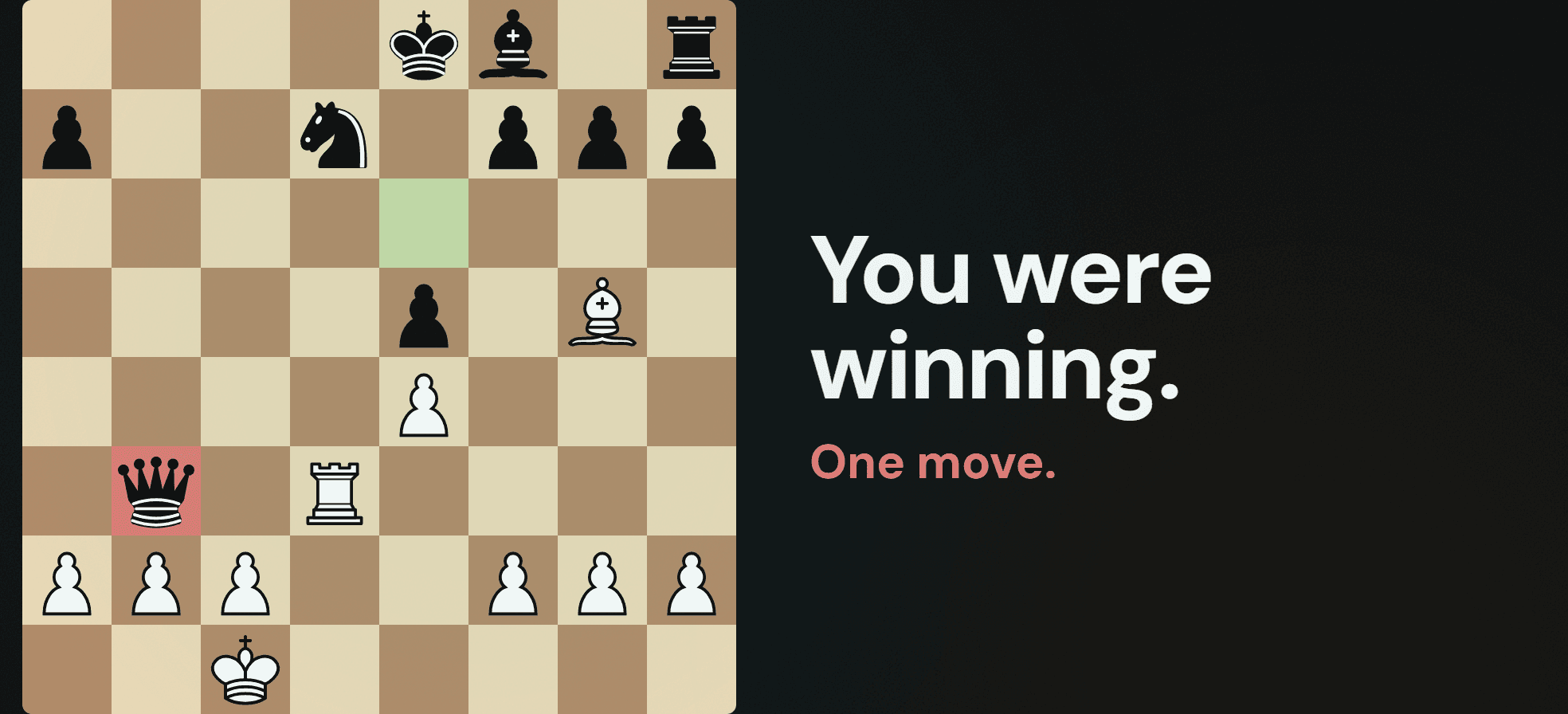
The position above comes from Morphy's Opera Game, with a mistake added for the example. White is winning and plays a natural rook move. A forced mate was available in the same position.
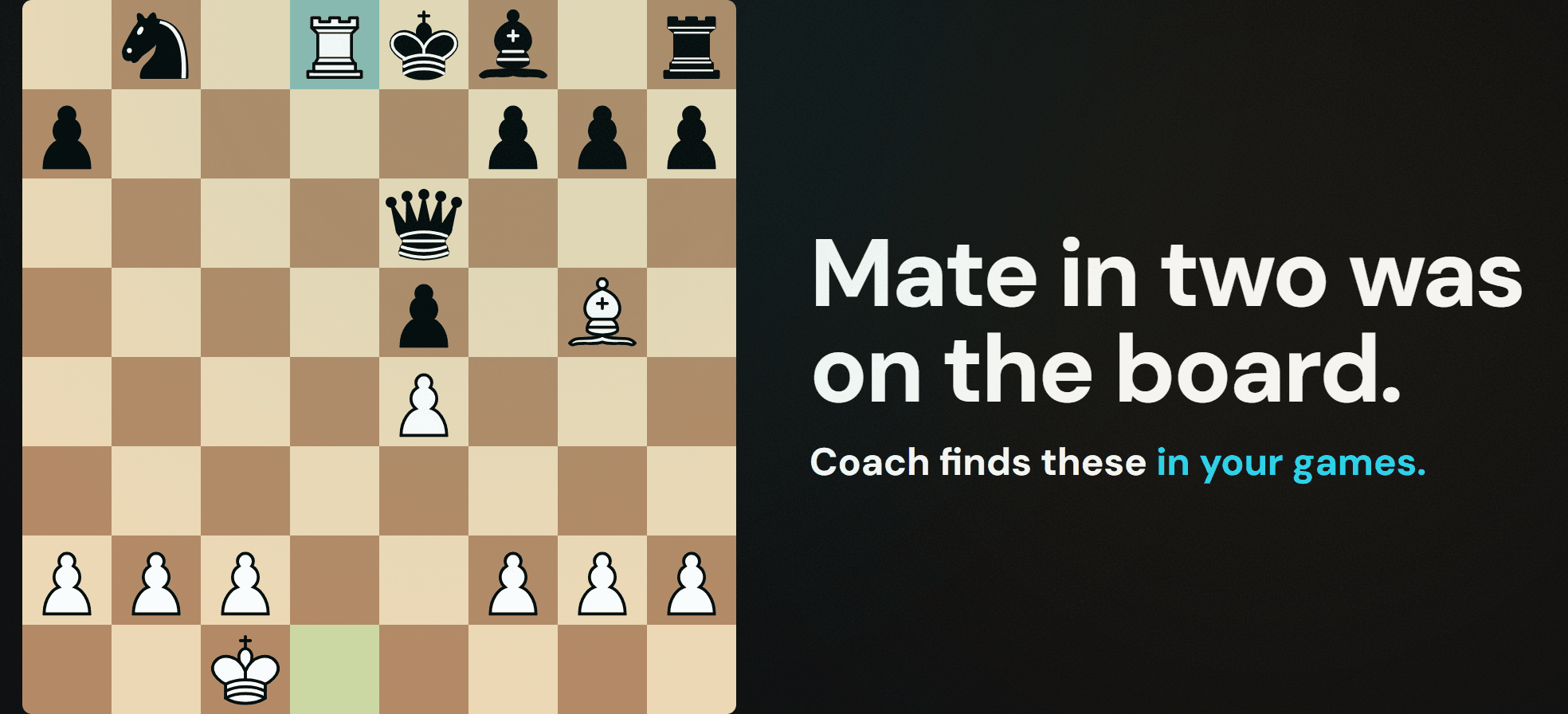
The queen gives itself up on b8, the knight has to take, and the rook mates on d8. Morphy found it in 1858. In your own games, the coach lists every position like this one, grouped by what went wrong, and each board links back to the full game in the analyzer.
Where the AI Speaks, and Where It Does Not
The scores, the boards, and the comparisons contain no AI. They are arithmetic on engine output, which means they come out the same every time you load the page.
The AI is the part you can talk to. It is called Chef Pawn, and you ask it things in plain words: what is costing me the most rating, am I getting better or stuck, why was this move bad.
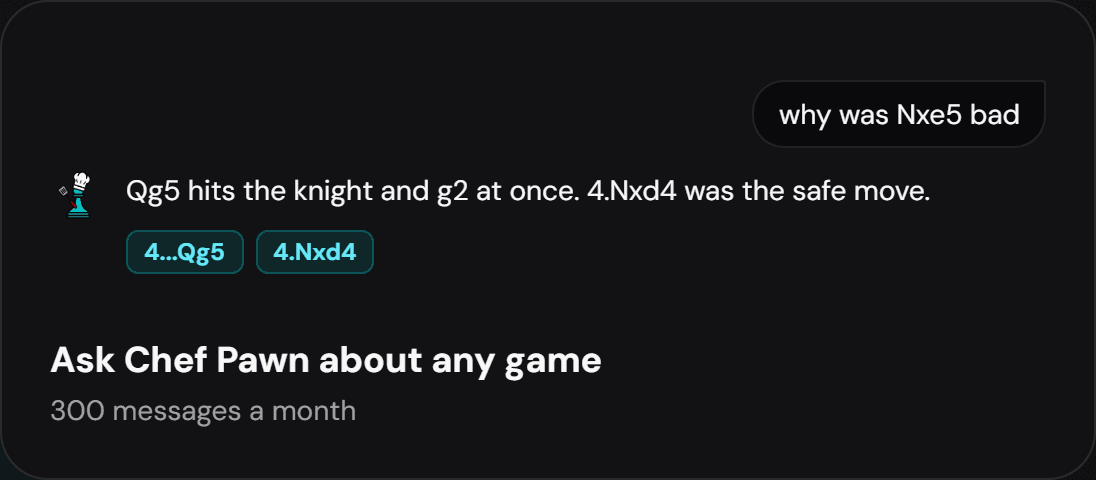
Language models are fluent and unreliable about chess. Ask one about a position and it will describe a knight on a square where there is no knight, in a confident and well-written sentence. We saw exactly that in testing, so the coach is built around three restrictions.
It never reads the board itself. The model is not handed a position and asked what it thinks. It receives facts our own code has already worked out: which pieces are attacked, what the engine's best line is, and what happened next in the game.
Every line comes from Stockfish. When Chef Pawn shows you a continuation, the engine calculated it. You can step through it on a board inside the chat, or play the position yourself and see how your move compares.
Its answer is checked before you see it. Each claim about a piece on a square, an attack, or a capture is tested against the actual position. A false claim is sent back for a rewrite, and if it is still false, it is cut.
The numbers work the same way. Chef Pawn reads the figures your dashboard shows, so the chat cannot tell you 1.4 blunders a game while the page says 1.8.
Practice Made From Your Own Games
Knowing your weakest area is half of the work. The other half is repetition on positions that look like the ones you get wrong.
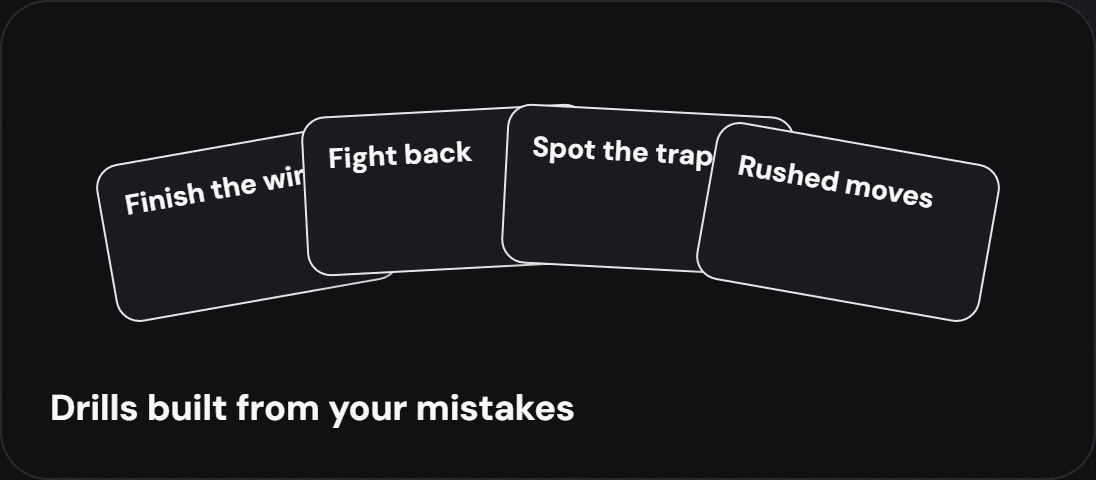
- Finish the win puts you back in games you were winning and lost, starting just before the turn, against a bot that plays like a human at your rating.
- Fight back is the reverse: a game you were losing, from the last point at which it could still be held.
- Spot the trap shows two candidate moves. One is safe, and the other is a blunder a real player made in that position. You choose.
- Rushed moves collects the serious errors you played in ten seconds or less and gives you thirty seconds to find the better move.
The first, second, and fourth are built from your games alone. If conversion is your lowest score, the coach sends you to Finish the win, and the positions waiting there are your own thrown games.
What It Cannot Do
It needs games. Three is the minimum, and the picture gets steadier as you approach thirty. It reads rated games against people, so games against bots are left out.
It does not promise rating points. Nobody can honestly make that promise, a human coach included. It tells you where your games are being lost and gives you those positions to practice. Showing up is your part.
It is also no replacement for a strong human coach if you have one. A good coach knows you, notices when you are tilted, and adjusts. What the software offers is coverage: it has read every move of your recent games, and it is available at two in the morning.
Frequently Asked Questions
Is the AI coach just an engine with a chat window?
No. The engine supplies the evaluations and the lines. The coach adds the layer above them: counting patterns across thirty games, comparing you with players at your rating, and explaining a position in words. The explanation is checked against the board before it reaches you.
Does it work with Lichess?
Yes. Chess.com and Lichess are both supported, and subscribers' new games are picked up overnight. If you played the day before, a short email arrives in the morning with your rating, your record, and one move worth another look when the day had one.
How much does it cost?
Coach is $9 a month, or $72 a year, and it includes everything in Premium. The price is lower in some countries. The limit on the chat is 300 messages a month, which is ten a day.
Can I try it without paying?
Yes. The free checkup reads your last twenty games and shows what is costing you the most, with the moves on the board. It takes a couple of minutes and needs no account.
Start With Your Own Games
Articles about improvement are written for the average player, and you are a specific one. The quickest way to find out which of the five areas is yours is to run the checkup on your username. If you would rather begin with a single game, the analyzer is free and has no daily limit. And if the checkup shows you something you did not know about your own chess, the coach is where you go to work on it.
Ready to Apply What You Learned?
Put these tips into practice by analyzing your next game with Chess It Up.
Analyze Your Games FreeRelated Articles
How to Analyze Your Chess Games Like a Grandmaster
A repeatable method for reviewing your own games: find the moves that decided them, spot your recurring mistakes, and turn losses into rating points.
What Is a Good Accuracy Score in Chess?
Accuracy benchmarks by rating, what the percentage measures, why your score swings twenty points between games, and when a 95 means less than an 80.
Chess Move Classifications Explained: Brilliant to Blunder
What every move grade means — Brilliant, Great Move, Best, Excellent, Good, Inaccuracy, Mistake, Blunder — and how the engine decides which one your move earns.